As DAB-DRT is celebrating its 10th year anniversary, we are excited to reflect on our journey and give back to literature-society by sharing insights from a decade of experience. Over the years, we have been deeply involved in numerous research projects and employed various strategies to ensure impactful outcomes. One area where we take particular pride is our expertise in qualitative research. This article will inform the readers about DAB-DRT’s approach to qualitative research, its understanding, and reveal the quality assurance protocols that drive the firm’s approach to qualitative research.
Why Qualitative Research?
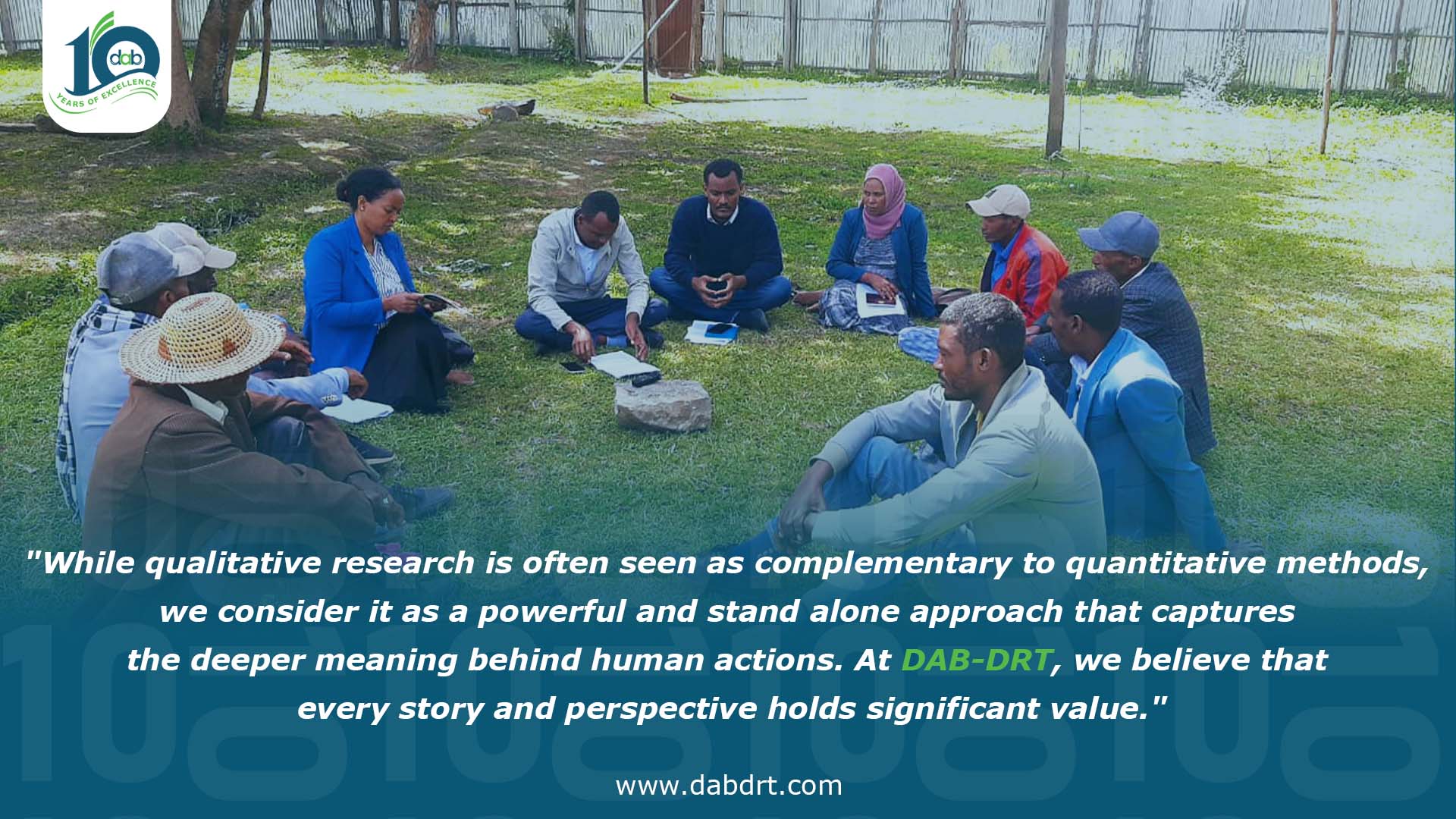
Qualitative research is a method focused on exploring and understanding the depth and complexity of human experiences, behaviors, and social phenomena—insights that numbers alone cannot reveal because not everything is quantifiable, and some research questions are best addressed through qualitative research methods. It involves collecting non-numerical data through methods such as Interviews, Focus Group Discussions, and Observations to gain insights into people’s attitudes, beliefs, and motivations in their natural setting.
While qualitative research is often seen as complementary to quantitative methods, we consider it as a powerful and stand alone approach that captures the deeper meaning behind human actions. At DAB-DRT, we believe that every story and perspective holds significant value. Here are five reasons why we conduct qualitative research:
- Exploration – When something is not well defined or understood, qualitative methods help explore and uncover new insights.
- Complexity – While complicated problems can be quantified, qualitative research is essential when the goal is to describe and distill complexity into manageable parts.
- Context – Qualitative methods help us understand the context and environment in which a user operates, offering richer, more nuanced data.
- Explanation – Qualitative research is invaluable when explaining the linkages or mechanisms behind certain phenomena.
- Measures do not fit the problem – When traditional measures do not align with the research question, qualitative methods help uncover the right things to measure.
We also understand that conducting qualitative research is inherently challenging, demanding adaptability, cultural awareness, and a meticulous approach. Recognizing these challenges, DAB-DRT maintains rigorous standards throughout every stage of the research process, employing intentional strategies to address challenges and ensure the highest-quality data.
Building the Foundation
The process begins with recruiting seasoned professionals who excel at building rapport and capturing the nuances that make each story unique. Expertise alone, however, is not enough. Hence, we dedicate 4–6 days to train our teams, immersing them in project goals and tools while conducting role-play interviews to simulate real-world scenarios. This ensures the team is aligned and equipped with practical strategies to engage participants effectively.
Next, we take our tools into the field, piloting them in real-world settings to ensure they resonate with participants. This step is crucial for identifying and addressing linguistic or cultural adjustments, ensuring our research tools are accessible and inclusive before full-scale data collection begins. This stage helps us refine our instruments.
Ensuring Quality at Every Stage
Once the tools are refined, we deploy the field team for a full-scale data collection. Our project coordinators closely monitor this phase, conducting daily debrief sessions to evaluate the depth, emerging themes, and data saturation. Such proactive monitoring enables us to consistently uphold our data’s quality and ensure we stay aligned with the project’s objectives.
As audio files and transcripts are received, our quality checkers rigorously review them by cross-reference audio recordings with transcripts to ensure that every nuance is captured, preserving the richness of participant narratives. This meticulous attention to detail guarantees the accuracy and completeness of the data before analysis begins.
Transforming Data into Insights
Post-fieldwork, the research team comes together for a synthesis workshop. These collaborative sessions bring the entire team together to dive deeply into the data, refining findings and enriching insights. This phase ensures no detail is overlooked, and all voices are represented. During the analysis stage, our experienced data encoders employ advanced thematic coding software, such as Dedoose, NVivo, and Atlas.ti, to organize and structure data into actionable themes. These tools enable us to manage complexity effectively, ensuring rigorous and systematic analysis. Finally, our senior research officers oversee the organization of the data, final analysis, and report writing. This stage transforms raw data into polished and meaningful reports that provide our clients with clear, actionable insights.
Why DAB-DRT?
At DAB-DRT, we are dedicated to demonstrating that qualitative research is not merely a companion to quantitative methods. It is a powerful, independent approach that illuminates the heart of human experience. Our process produces reliable data and generates meaningful insights, giving our clients the clarity and context they need to make informed decisions. This approach enables us to craft reports that inform and guide clients toward impactful, actionable solutions. With every project, we reaffirm our commitment to quality and innovation in our tasks.
As one could easily infer from our understanding and approach to the method, DAB-DRT is a house of qualitative research experts who can harness the true potential of qualitative research and effectively collaborate with you. Whether you are seeking deep insights into human behavior or understanding user experiences, DAB-DRT is your reliable partner in achieving meaningful results.